ENVIRONMENTALPRODUCT DECLARATIONIN ACCORDANCE WITH ISO 14025 AND ISO 21930:2007SmartEPD-2024-037-0183-01.1Rustbond PSDate of Issue:Oct 24, 2024Expiration:Oct 24, 2029Last updated:Oct 24, 2024
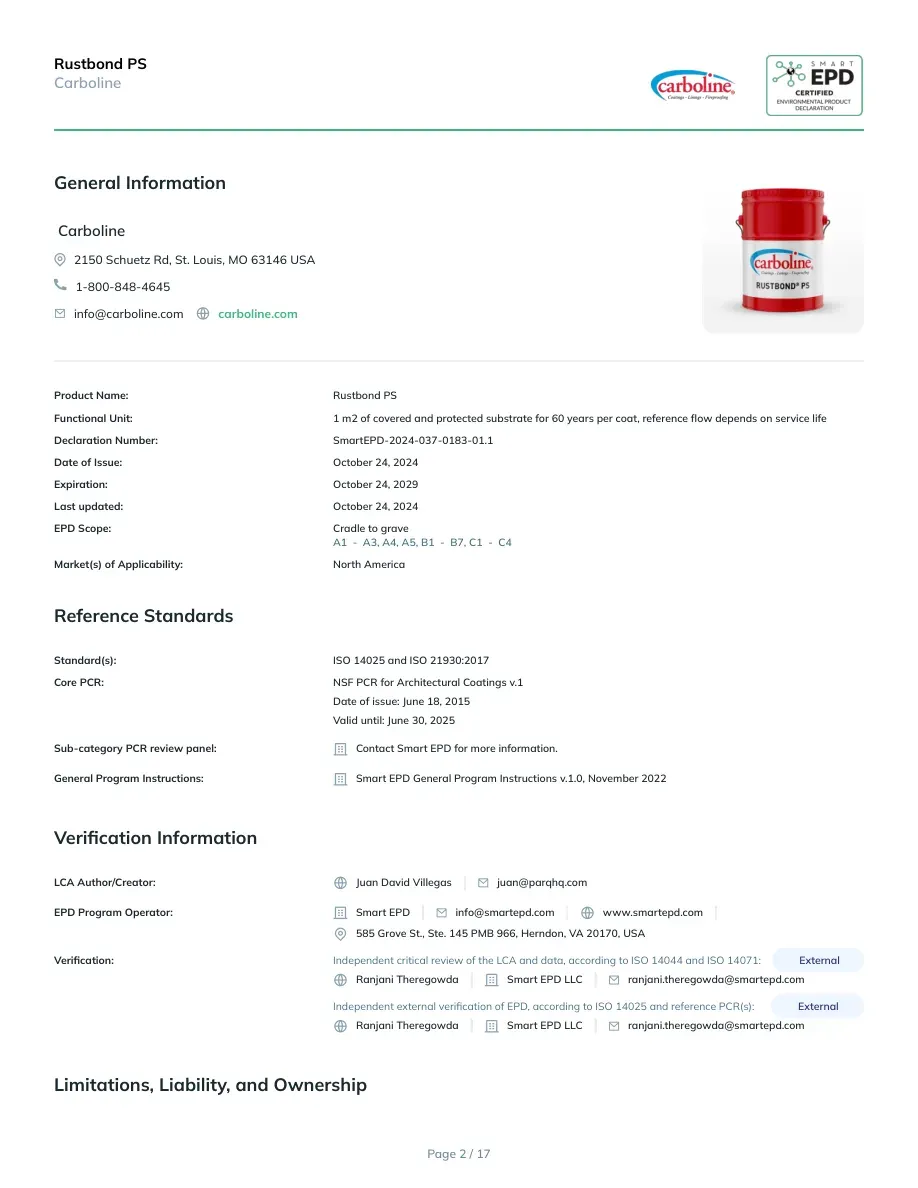
Rustbond PSCarbolineGeneral Information Carboline 2150 Schuetz Rd, St. Louis, MO 63146 USA1-800-848-4645info@carboline.comcarboline.comProduct Name:Rustbond PSFunctional Unit:1 m2 of covered and protected substrate for 60 years per coat, reference flow depends on service lifeDeclaration Number:SmartEPD-2024-037-0183-01.1Date of Issue:October 24, 2024Expiration:October 24, 2029Last updated:October 24, 2024EPD Scope:Cradle to graveA1 - A3, A4, A5, B1 - B7, C1 - C4 Market(s) of Applicability:North AmericaReference StandardsStandard(s):ISO 14025 and ISO 21930:2017Core PCR:NSF PCR for Architectural Coatings v.1Date of issue: June 18, 2015Valid until: June 30, 2025Sub-category PCR review panel:Contact Smart EPD for more information.General Program Instructions:Smart EPD General Program Instructions v.1.0, November 2022Verification InformationLCA Author/Creator:Juan David Villegasjuan@parqhq.comEPD Program Operator:Smart EPDinfo@smartepd.comwww.smartepd.com585 Grove St., Ste. 145 PMB 966, Herndon, VA 20170, USAVerification:Independent critical review of the LCA and data, according to ISO 14044 and ISO 14071:ExternalRanjani TheregowdaSmart EPD LLCranjani.theregowda@smartepd.comIndependent external verification of EPD, according to ISO 14025 and reference PCR(s):ExternalRanjani TheregowdaSmart EPD LLCranjani.theregowda@smartepd.comLimitations, Liability, and OwnershipPage 2 / 17
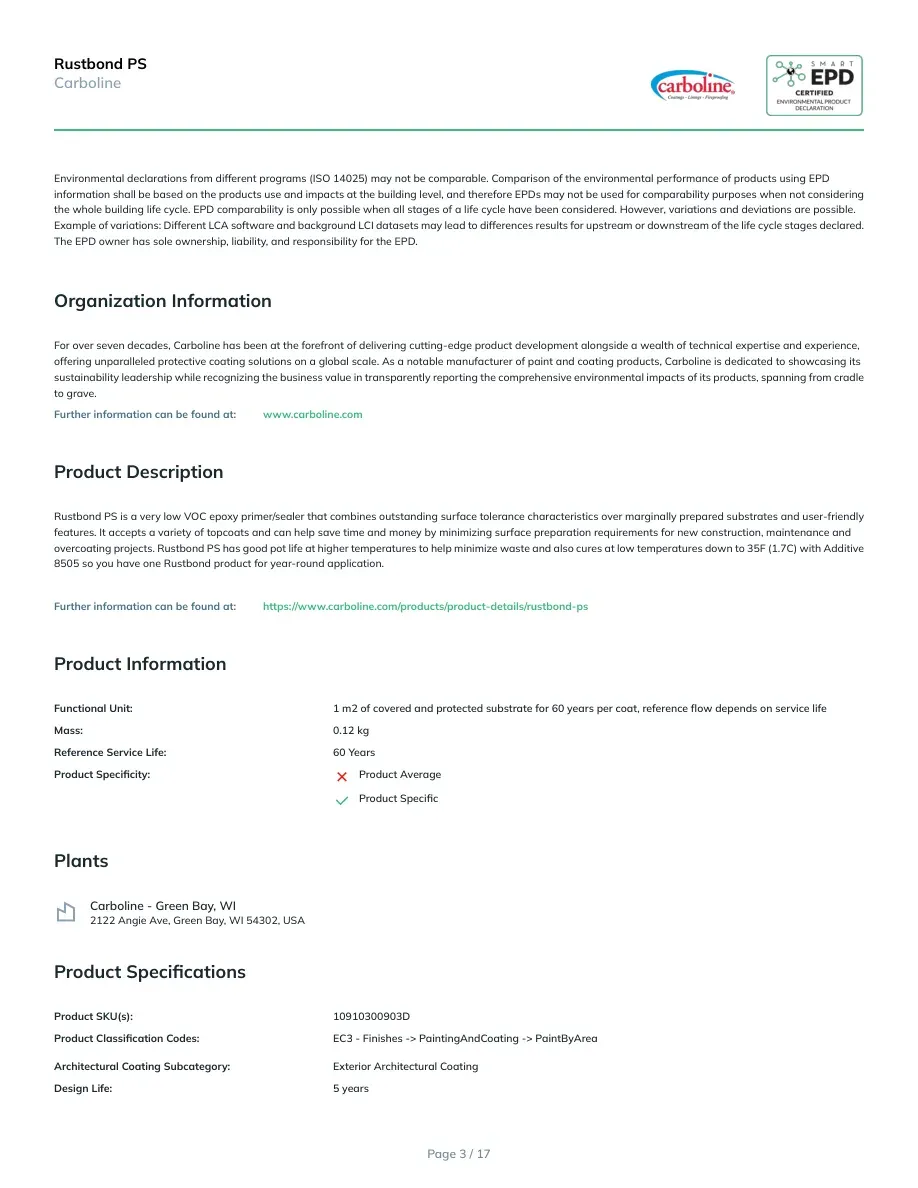
Rustbond PSCarbolineEnvironmental declarations from different programs (ISO 14025) may not be comparable. Comparison of the environmental performance of products using EPD information shall be based on the products use and impacts at the building level, and therefore EPDs may not be used for comparability purposes when not considering the whole building life cycle. EPD comparability is only possible when all stages of a life cycle have been considered. However, variations and deviations are possible. Example of variations: Different LCA software and background LCI datasets may lead to differences results for upstream or downstream of the life cycle stages declared. The EPD owner has sole ownership, liability, and responsibility for the EPD.Organization InformationFor over seven decades, Carboline has been at the forefront of delivering cutting-edge product development alongside a wealth of technical expertise and experience, offering unparalleled protective coating solutions on a global scale. As a notable manufacturer of paint and coating products, Carboline is dedicated to showcasing its sustainability leadership while recognizing the business value in transparently reporting the comprehensive environmental impacts of its products, spanning from cradle to grave.Further information can be found at:www.carboline.comProduct DescriptionRustbond PS is a very low VOC epoxy primer/sealer that combines outstanding surface tolerance characteristics over marginally prepared substrates and user-friendly features. It accepts a variety of topcoats and can help save time and money by minimizing surface preparation requirements for new construction, maintenance and overcoating projects. Rustbond PS has good pot life at higher temperatures to help minimize waste and also cures at low temperatures down to 35F (1.7C) with Additive 8505 so you have one Rustbond product for year-round application.Further information can be found at:https://www.carboline.com/products/product-details/rustbond-psProduct InformationFunctional Unit:1 m2 of covered and protected substrate for 60 years per coat, reference flow depends on service lifeMass:0.12 kgReference Service Life:60 YearsProduct Specificity:Product AverageProduct SpecificPlantsCarboline - Green Bay, WI2122 Angie Ave, Green Bay, WI 54302, USAProduct SpecificationsProduct SKU(s):10910300903DProduct Classification Codes:EC3 - Finishes -> PaintingAndCoating -> PaintByAreaArchitectural Coating Subcategory:Exterior Architectural CoatingDesign Life:5 yearsPage 3 / 17
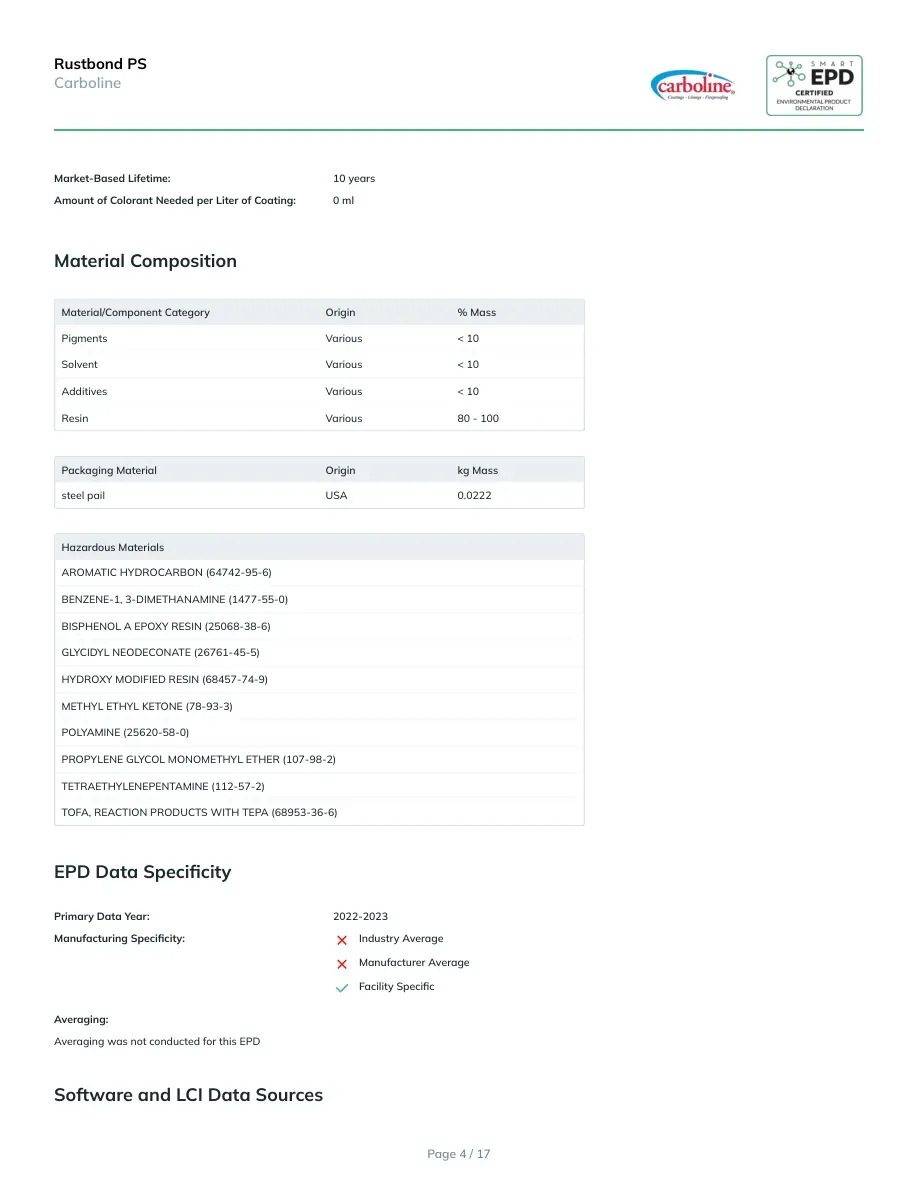
Rustbond PSCarbolineMarket-Based Lifetime:10 yearsAmount of Colorant Needed per Liter of Coating:0 mlMaterial CompositionMaterial/Component CategoryOrigin% MassPigmentsVarious< 10SolventVarious< 10AdditivesVarious< 10ResinVarious80 - 100Packaging MaterialOriginkg Masssteel pailUSA0.0222Hazardous MaterialsAROMATIC HYDROCARBON (64742-95-6)BENZENE-1, 3-DIMETHANAMINE (1477-55-0)BISPHENOL A EPOXY RESIN (25068-38-6)GLYCIDYL NEODECONATE (26761-45-5)HYDROXY MODIFIED RESIN (68457-74-9)METHYL ETHYL KETONE (78-93-3)POLYAMINE (25620-58-0)PROPYLENE GLYCOL MONOMETHYL ETHER (107-98-2)TETRAETHYLENEPENTAMINE (112-57-2)TOFA, REACTION PRODUCTS WITH TEPA (68953-36-6)EPD Data SpecificityPrimary Data Year:2022-2023Manufacturing Specificity:Industry AverageManufacturer AverageFacility SpecificAveraging:Averaging was not conducted for this EPDSoftware and LCI Data SourcesPage 4 / 17
Rustbond PSCarbolineLCA Software:SimaPro v. 9.5LCI Foreground Database(s):Ecoinvent v. 3.9.1LCI Background Database(s):Ecoinvent v. 3.9.1Renewable ElectricityEnergy Attribute Certificates (EACs) such as Re-newable Energy Certificates (RECs) or Power Pur-chase Agreements (PPAs) are included in the baseline reported results:NoPage 5 / 17
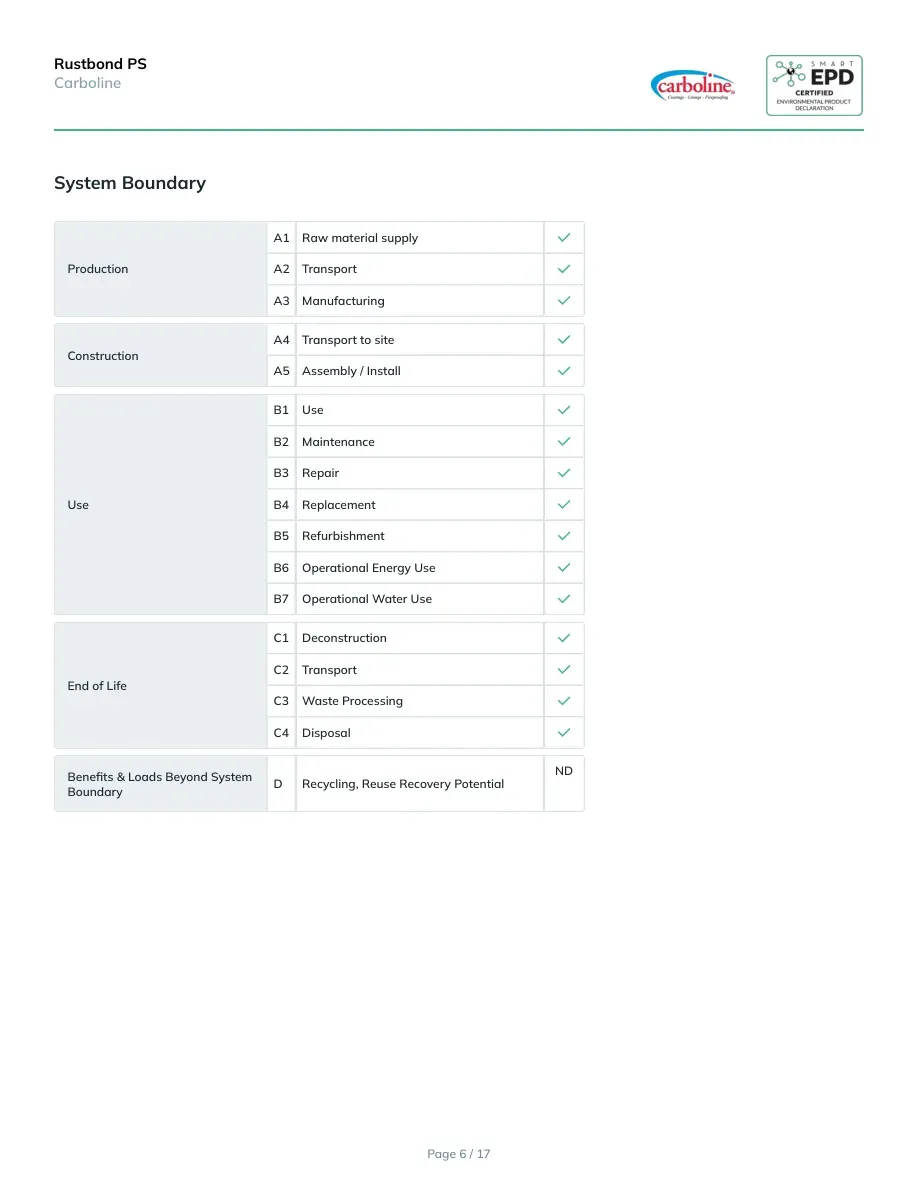
Rustbond PSCarbolineSystem BoundaryProductionA1Raw material supplyA2TransportA3ManufacturingConstructionA4Transport to siteA5Assembly / InstallUseB1UseB2MaintenanceB3RepairB4ReplacementB5RefurbishmentB6Operational Energy UseB7Operational Water UseEnd of LifeC1DeconstructionC2TransportC3Waste ProcessingC4DisposalBenefits & Loads Beyond System BoundaryDRecycling, Reuse Recovery PotentialNDPage 6 / 17
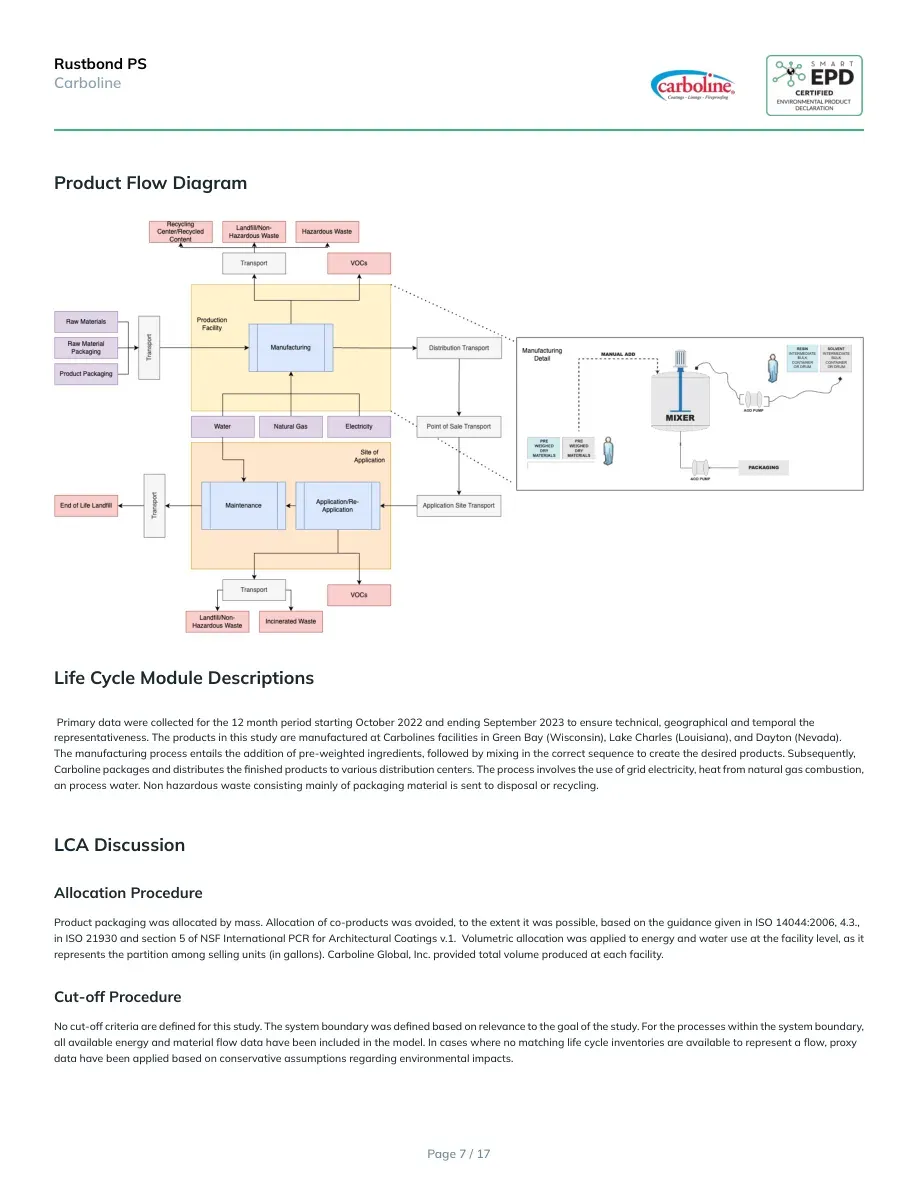
Rustbond PSCarbolineProduct Flow DiagramLife Cycle Module Descriptions Primary data were collected for the 12 month period starting October 2022 and ending September 2023 to ensure technical, geographical and temporal the representativeness. The products in this study are manufactured at Carbolines facilities in Green Bay (Wisconsin), Lake Charles (Louisiana), and Dayton (Nevada). The manufacturing process entails the addition of pre-weighted ingredients, followed by mixing in the correct sequence to create the desired products. Subsequently, Carboline packages and distributes the finished products to various distribution centers. The process involves the use of grid electricity, heat from natural gas combustion, an process water. Non hazardous waste consisting mainly of packaging material is sent to disposal or recycling.LCA DiscussionAllocation ProcedureProduct packaging was allocated by mass. Allocation of co-products was avoided, to the extent it was possible, based on the guidance given in ISO 14044:2006, 4.3., in ISO 21930 and section 5 of NSF International PCR for Architectural Coatings v.1. Volumetric allocation was applied to energy and water use at the facility level, as it represents the partition among selling units (in gallons). Carboline Global, Inc. provided total volume produced at each facility.Cut-off ProcedureNo cut-off criteria are defined for this study. The system boundary was defined based on relevance to the goal of the study. For the processes within the system boundary, all available energy and material flow data have been included in the model. In cases where no matching life cycle inventories are available to represent a flow, proxy data have been applied based on conservative assumptions regarding environmental impacts.Page 7 / 17
Rustbond PSCarbolineData Quality DiscussionThe quality of inventory data is evaluated based on several criteria, including precision, completeness, consistency, and representativeness.Precision and Completeness• Precision: The inventory data used in this study were either directly measured, calculated, or estimated based on primary data sources, ensuring high precision. Background data from ecoinvent v3.9.1 database also has documented precision to the extent available.• Completeness: The product system's mass balance and inventory completeness were thoroughly checked. Some exclusions were made in line with the PCR require-ments, such as personnel impacts, R&D activities, business travel, secondary packaging, point of sale infrastructure, and the coating applicator. However, no data was intentionally omitted..Consistency and Reproducibility• Consistency: Primary data were collected with a similar level of detail, while background data came from the ecoinvent v3.9.1 database. The modeling approach and other methodological choices were applied consistently throughout the model. Default values from the PCR were considered where there was unavailability of primary data, For example, the default waste transport distance was used for product disposal assessment.• Reproducibility: This study ensures reproducibility by providing comprehensive disclosure of input-output data, dataset choices, and modeling approaches. A knowledgeable third party should be able to approximate the results using the same data and modeling methods.Representativeness• Temporal: Primary data were collected for the one-year period of October 2022 to September 2023 to ensure the representativeness of post-consumer content. Secondary data from the ecoinvent v3.9.1 database is typically representative of recent years.• Geographical: Primary data represent Carboline's production facilities in Green Bay (Wisconsin), Dayton (Nevada) and Lake Charles (Louisiana). Where applicable, differences in electric grid mix were considered using appropriate secondary data. The use of country-specific data ensures high geographical representativeness, and proxy data were only used when country-specific data were unavailable.• Technological: Both primary and secondary data were tailored to the specific technologies studied, ensuring high technological representativeness. Where no direct raw material information was available in the ecoinvent 3.9.1 database, proxies were identified and used.Page 8 / 17
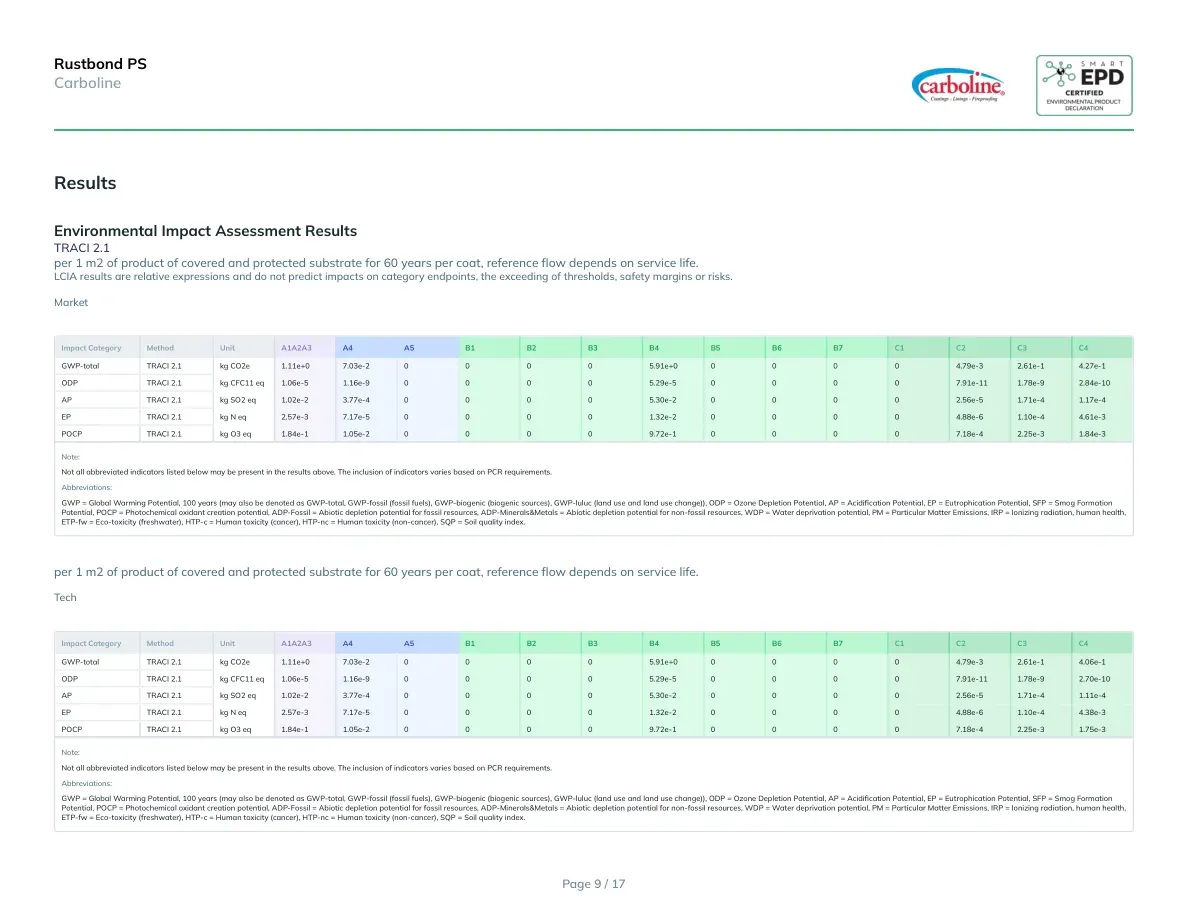
Rustbond PSCarbolineResultsEnvironmental Impact Assessment ResultsTRACI 2.1per 1 m2 of product of covered and protected substrate for 60 years per coat, reference flow depends on service life.LCIA results are relative expressions and do not predict impacts on category endpoints, the exceeding of thresholds, safety margins or risks.MarketImpact CategoryMethodUnitA1A2A3A4A5B1B2B3B4B5B6B7C1C2C3C4GWP-totalTRACI 2.1kg CO2e1.11e+07.03e-200005.91e+000004.79e-32.61e-14.27e-1ODPTRACI 2.1kg CFC11 eq1.06e-51.16e-900005.29e-500007.91e-111.78e-92.84e-10APTRACI 2.1kg SO2 eq1.02e-23.77e-400005.30e-200002.56e-51.71e-41.17e-4EPTRACI 2.1kg N eq2.57e-37.17e-500001.32e-200004.88e-61.10e-44.61e-3POCPTRACI 2.1kg O3 eq1.84e-11.05e-200009.72e-100007.18e-42.25e-31.84e-3Note:Not all abbreviated indicators listed below may be present in the results above. The inclusion of indicators varies based on PCR requirements.Abbreviations:GWP = Global Warming Potential, 100 years (may also be denoted as GWP-total, GWP-fossil (fossil fuels), GWP-biogenic (biogenic sources), GWP-luluc (land use and land use change)), ODP = Ozone Depletion Potential, AP = Acidification Potential, EP = Eutrophication Potential, SFP = Smog Formation Potential, POCP = Photochemical oxidant creation potential, ADP-Fossil = Abiotic depletion potential for fossil resources, ADP-Minerals&Metals = Abiotic depletion potential for non-fossil resources, WDP = Water deprivation potential, PM = Particular Matter Emissions, IRP = Ionizing radiation, human health, ETP-fw = Eco-toxicity (freshwater), HTP-c = Human toxicity (cancer), HTP-nc = Human toxicity (non-cancer), SQP = Soil quality index.per 1 m2 of product of covered and protected substrate for 60 years per coat, reference flow depends on service life.TechImpact CategoryMethodUnitA1A2A3A4A5B1B2B3B4B5B6B7C1C2C3C4GWP-totalTRACI 2.1kg CO2e1.11e+07.03e-200005.91e+000004.79e-32.61e-14.06e-1ODPTRACI 2.1kg CFC11 eq1.06e-51.16e-900005.29e-500007.91e-111.78e-92.70e-10APTRACI 2.1kg SO2 eq1.02e-23.77e-400005.30e-200002.56e-51.71e-41.11e-4EPTRACI 2.1kg N eq2.57e-37.17e-500001.32e-200004.88e-61.10e-44.38e-3POCPTRACI 2.1kg O3 eq1.84e-11.05e-200009.72e-100007.18e-42.25e-31.75e-3Note:Not all abbreviated indicators listed below may be present in the results above. The inclusion of indicators varies based on PCR requirements.Abbreviations:GWP = Global Warming Potential, 100 years (may also be denoted as GWP-total, GWP-fossil (fossil fuels), GWP-biogenic (biogenic sources), GWP-luluc (land use and land use change)), ODP = Ozone Depletion Potential, AP = Acidification Potential, EP = Eutrophication Potential, SFP = Smog Formation Potential, POCP = Photochemical oxidant creation potential, ADP-Fossil = Abiotic depletion potential for fossil resources, ADP-Minerals&Metals = Abiotic depletion potential for non-fossil resources, WDP = Water deprivation potential, PM = Particular Matter Emissions, IRP = Ionizing radiation, human health, ETP-fw = Eco-toxicity (freshwater), HTP-c = Human toxicity (cancer), HTP-nc = Human toxicity (non-cancer), SQP = Soil quality index.Page 9 / 17
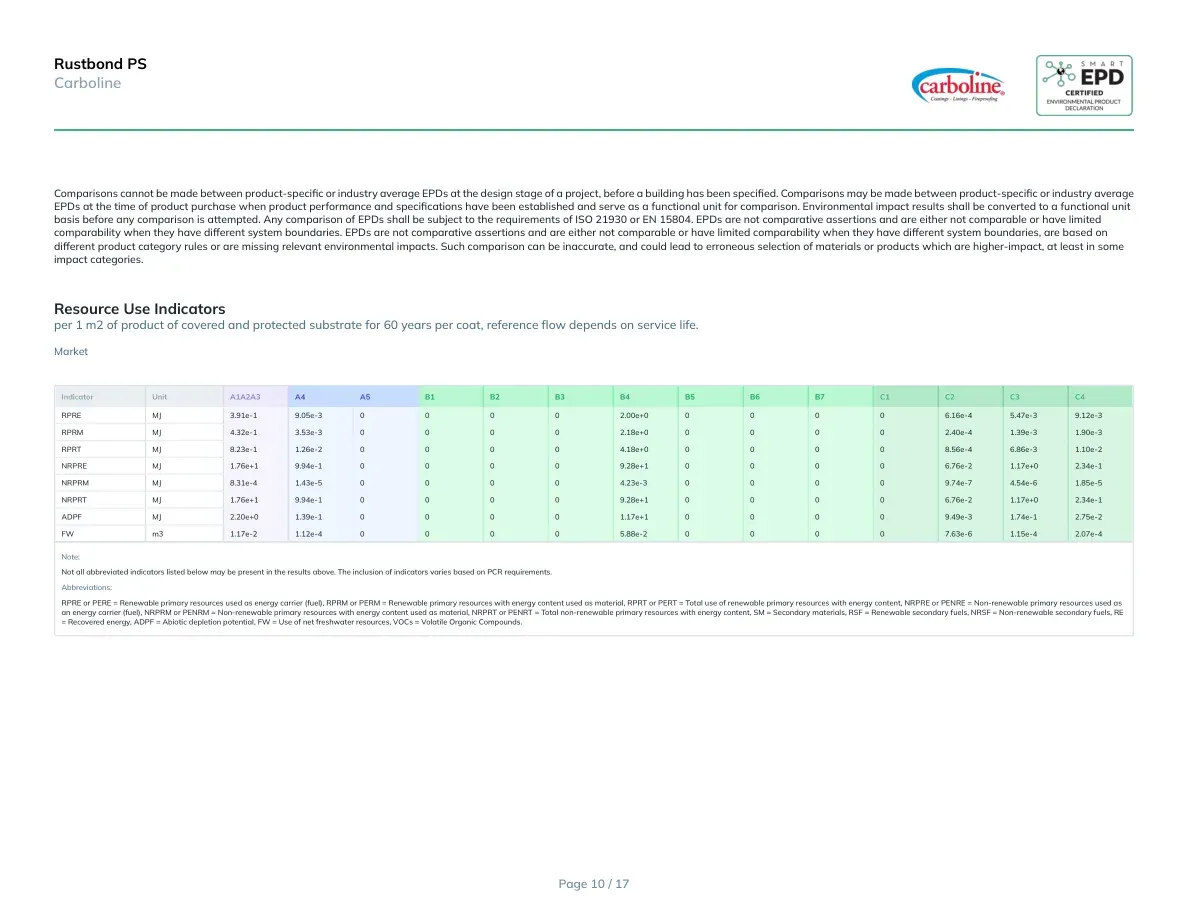
Rustbond PSCarbolineComparisons cannot be made between product-specific or industry average EPDs at the design stage of a project, before a building has been specified. Comparisons may be made between product-specific or industry average EPDs at the time of product purchase when product performance and specifications have been established and serve as a functional unit for comparison. Environmental impact results shall be converted to a functional unit basis before any comparison is attempted. Any comparison of EPDs shall be subject to the requirements of ISO 21930 or EN 15804. EPDs are not comparative assertions and are either not comparable or have limited comparability when they have different system boundaries. EPDs are not comparative assertions and are either not comparable or have limited comparability when they have different system boundaries, are based on different product category rules or are missing relevant environmental impacts. Such comparison can be inaccurate, and could lead to erroneous selection of materials or products which are higher-impact, at least in some impact categories.Resource Use Indicatorsper 1 m2 of product of covered and protected substrate for 60 years per coat, reference flow depends on service life.MarketIndicatorUnitA1A2A3A4A5B1B2B3B4B5B6B7C1C2C3C4RPREMJ3.91e-19.05e-300002.00e+000006.16e-45.47e-39.12e-3RPRMMJ4.32e-13.53e-300002.18e+000002.40e-41.39e-31.90e-3RPRTMJ8.23e-11.26e-200004.18e+000008.56e-46.86e-31.10e-2NRPREMJ1.76e+19.94e-100009.28e+100006.76e-21.17e+02.34e-1NRPRMMJ8.31e-41.43e-500004.23e-300009.74e-74.54e-61.85e-5NRPRTMJ1.76e+19.94e-100009.28e+100006.76e-21.17e+02.34e-1ADPFMJ2.20e+01.39e-100001.17e+100009.49e-31.74e-12.75e-2FWm31.17e-21.12e-400005.88e-200007.63e-61.15e-42.07e-4Note:Not all abbreviated indicators listed below may be present in the results above. The inclusion of indicators varies based on PCR requirements.Abbreviations:RPRE or PERE = Renewable primary resources used as energy carrier (fuel), RPRM or PERM = Renewable primary resources with energy content used as material, RPRT or PERT = Total use of renewable primary resources with energy content, NRPRE or PENRE = Non-renewable primary resources used as an energy carrier (fuel), NRPRM or PENRM = Non-renewable primary resources with energy content used as material, NRPRT or PENRT = Total non-renewable primary resources with energy content, SM = Secondary materials, RSF = Renewable secondary fuels, NRSF = Non-renewable secondary fuels, RE = Recovered energy, ADPF = Abiotic depletion potential, FW = Use of net freshwater resources, VOCs = Volatile Organic Compounds.Page 10 / 17
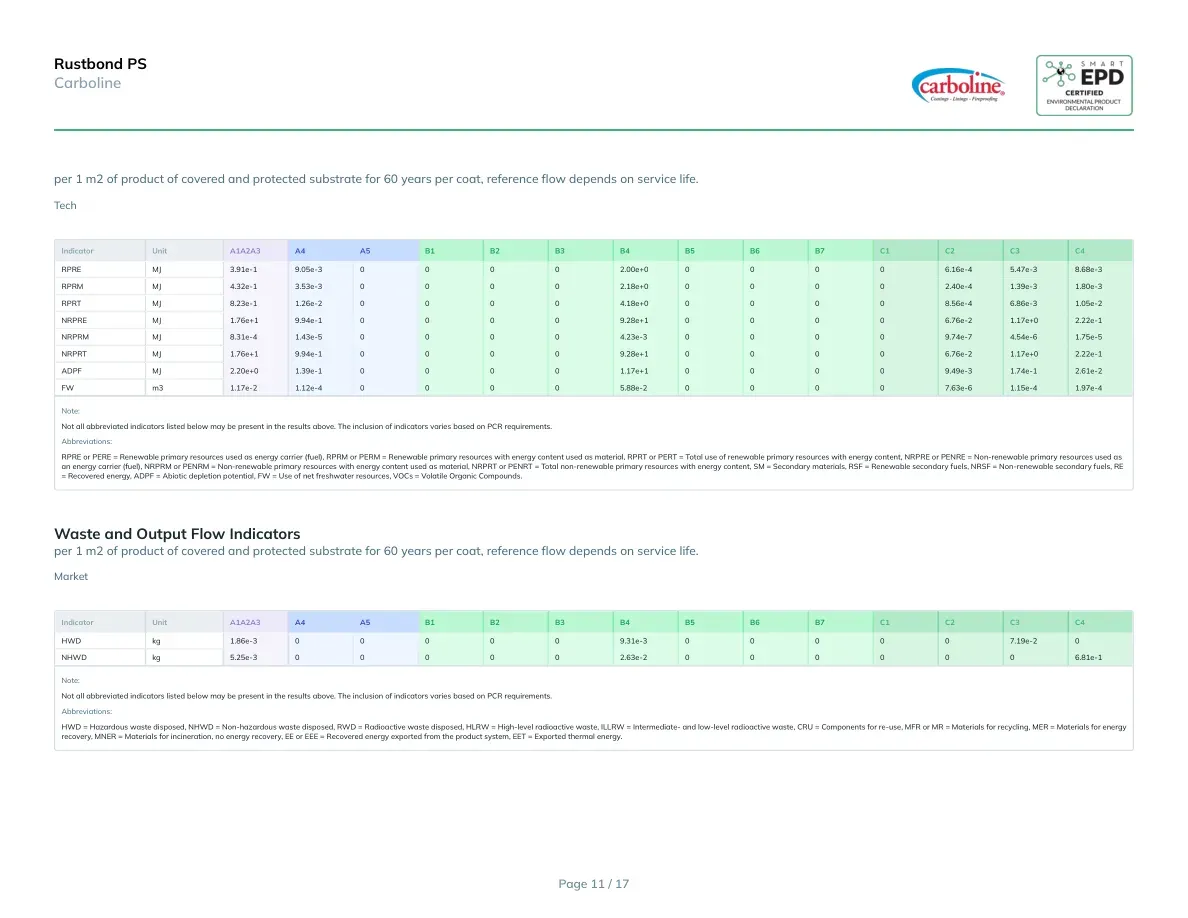
Rustbond PSCarbolineper 1 m2 of product of covered and protected substrate for 60 years per coat, reference flow depends on service life.TechIndicatorUnitA1A2A3A4A5B1B2B3B4B5B6B7C1C2C3C4RPREMJ3.91e-19.05e-300002.00e+000006.16e-45.47e-38.68e-3RPRMMJ4.32e-13.53e-300002.18e+000002.40e-41.39e-31.80e-3RPRTMJ8.23e-11.26e-200004.18e+000008.56e-46.86e-31.05e-2NRPREMJ1.76e+19.94e-100009.28e+100006.76e-21.17e+02.22e-1NRPRMMJ8.31e-41.43e-500004.23e-300009.74e-74.54e-61.75e-5NRPRTMJ1.76e+19.94e-100009.28e+100006.76e-21.17e+02.22e-1ADPFMJ2.20e+01.39e-100001.17e+100009.49e-31.74e-12.61e-2FWm31.17e-21.12e-400005.88e-200007.63e-61.15e-41.97e-4Note:Not all abbreviated indicators listed below may be present in the results above. The inclusion of indicators varies based on PCR requirements.Abbreviations:RPRE or PERE = Renewable primary resources used as energy carrier (fuel), RPRM or PERM = Renewable primary resources with energy content used as material, RPRT or PERT = Total use of renewable primary resources with energy content, NRPRE or PENRE = Non-renewable primary resources used as an energy carrier (fuel), NRPRM or PENRM = Non-renewable primary resources with energy content used as material, NRPRT or PENRT = Total non-renewable primary resources with energy content, SM = Secondary materials, RSF = Renewable secondary fuels, NRSF = Non-renewable secondary fuels, RE = Recovered energy, ADPF = Abiotic depletion potential, FW = Use of net freshwater resources, VOCs = Volatile Organic Compounds.Waste and Output Flow Indicatorsper 1 m2 of product of covered and protected substrate for 60 years per coat, reference flow depends on service life.MarketIndicatorUnitA1A2A3A4A5B1B2B3B4B5B6B7C1C2C3C4HWDkg1.86e-3000009.31e-3000007.19e-20NHWDkg5.25e-3000002.63e-20000006.81e-1Note:Not all abbreviated indicators listed below may be present in the results above. The inclusion of indicators varies based on PCR requirements.Abbreviations:HWD = Hazardous waste disposed, NHWD = Non-hazardous waste disposed, RWD = Radioactive waste disposed, HLRW = High-level radioactive waste, ILLRW = Intermediate- and low-level radioactive waste, CRU = Components for re-use, MFR or MR = Materials for recycling, MER = Materials for energy recovery, MNER = Materials for incineration, no energy recovery, EE or EEE = Recovered energy exported from the product system, EET = Exported thermal energy.Page 11 / 17
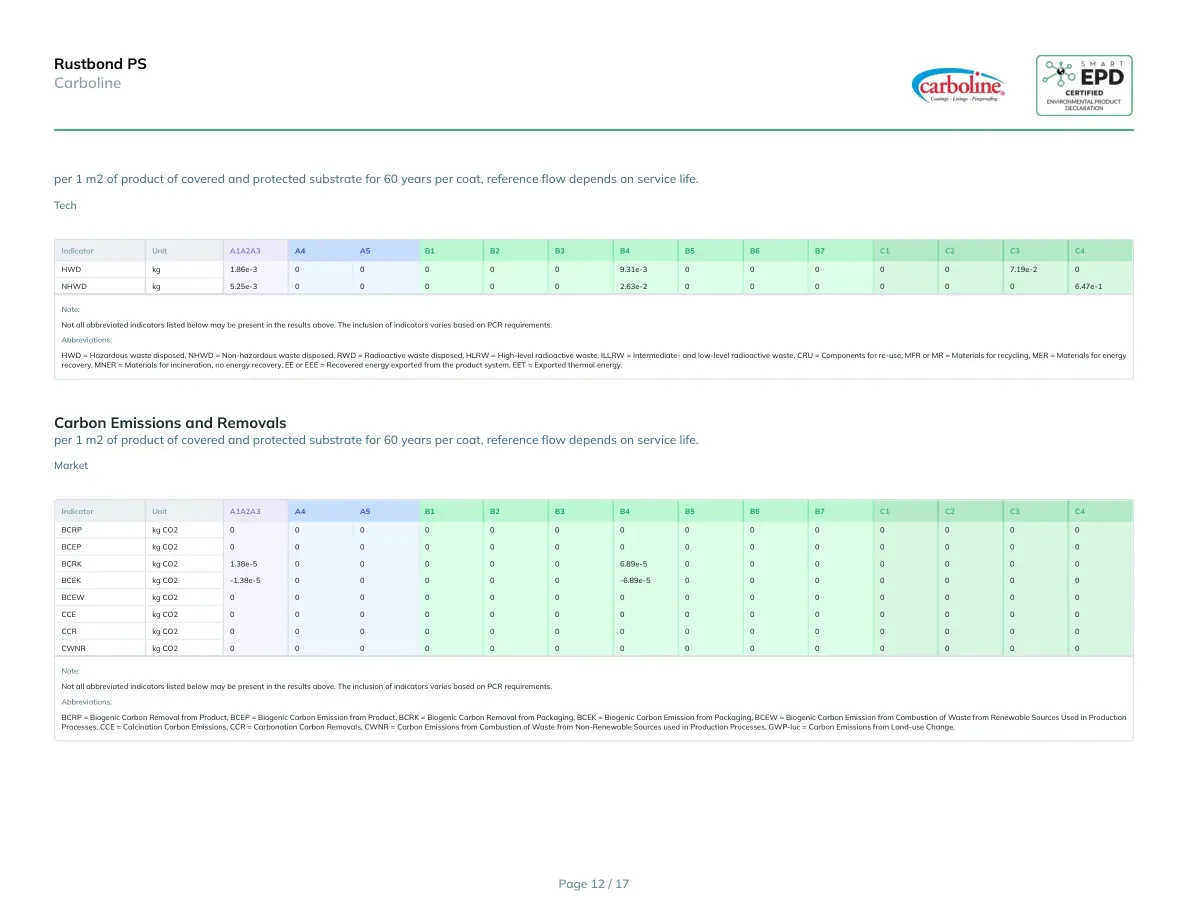
Rustbond PSCarbolineper 1 m2 of product of covered and protected substrate for 60 years per coat, reference flow depends on service life.TechIndicatorUnitA1A2A3A4A5B1B2B3B4B5B6B7C1C2C3C4HWDkg1.86e-3000009.31e-3000007.19e-20NHWDkg5.25e-3000002.63e-20000006.47e-1Note:Not all abbreviated indicators listed below may be present in the results above. The inclusion of indicators varies based on PCR requirements.Abbreviations:HWD = Hazardous waste disposed, NHWD = Non-hazardous waste disposed, RWD = Radioactive waste disposed, HLRW = High-level radioactive waste, ILLRW = Intermediate- and low-level radioactive waste, CRU = Components for re-use, MFR or MR = Materials for recycling, MER = Materials for energy recovery, MNER = Materials for incineration, no energy recovery, EE or EEE = Recovered energy exported from the product system, EET = Exported thermal energy.Carbon Emissions and Removalsper 1 m2 of product of covered and protected substrate for 60 years per coat, reference flow depends on service life.MarketIndicatorUnitA1A2A3A4A5B1B2B3B4B5B6B7C1C2C3C4BCRPkg CO200000000000000BCEPkg CO200000000000000BCRKkg CO21.38e-5000006.89e-50000000BCEKkg CO2-1.38e-500000-6.89e-50000000BCEWkg CO200000000000000CCEkg CO200000000000000CCRkg CO200000000000000CWNRkg CO200000000000000Note:Not all abbreviated indicators listed below may be present in the results above. The inclusion of indicators varies based on PCR requirements.Abbreviations:BCRP = Biogenic Carbon Removal from Product, BCEP = Biogenic Carbon Emission from Product, BCRK = Biogenic Carbon Removal from Packaging, BCEK = Biogenic Carbon Emission from Packaging, BCEW = Biogenic Carbon Emission from Combustion of Waste from Renewable Sources Used in Production Processes, CCE = Calcination Carbon Emissions, CCR = Carbonation Carbon Removals, CWNR = Carbon Emissions from Combustion of Waste from Non-Renewable Sources used in Production Processes, GWP-luc = Carbon Emissions from Land-use Change.Page 12 / 17
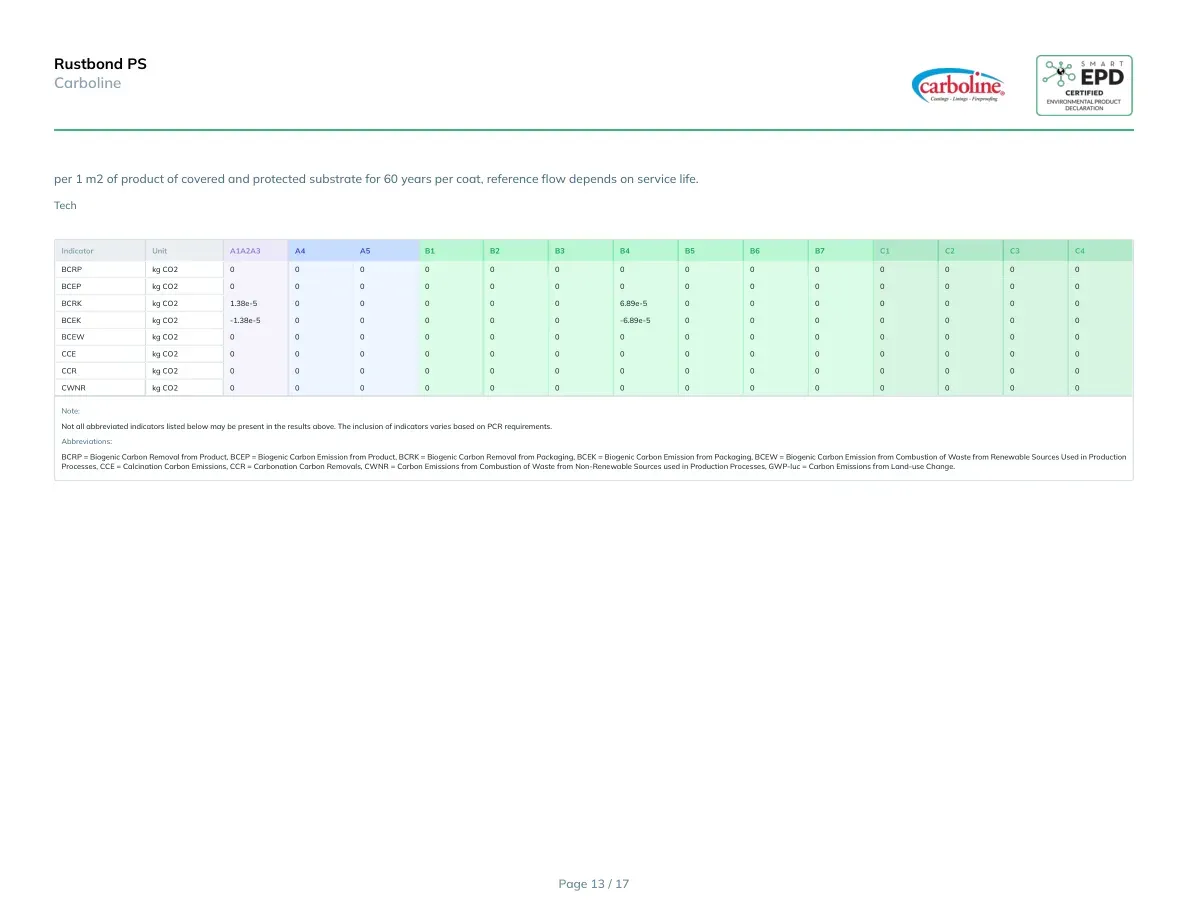
Rustbond PSCarbolineper 1 m2 of product of covered and protected substrate for 60 years per coat, reference flow depends on service life.TechIndicatorUnitA1A2A3A4A5B1B2B3B4B5B6B7C1C2C3C4BCRPkg CO200000000000000BCEPkg CO200000000000000BCRKkg CO21.38e-5000006.89e-50000000BCEKkg CO2-1.38e-500000-6.89e-50000000BCEWkg CO200000000000000CCEkg CO200000000000000CCRkg CO200000000000000CWNRkg CO200000000000000Note:Not all abbreviated indicators listed below may be present in the results above. The inclusion of indicators varies based on PCR requirements.Abbreviations:BCRP = Biogenic Carbon Removal from Product, BCEP = Biogenic Carbon Emission from Product, BCRK = Biogenic Carbon Removal from Packaging, BCEK = Biogenic Carbon Emission from Packaging, BCEW = Biogenic Carbon Emission from Combustion of Waste from Renewable Sources Used in Production Processes, CCE = Calcination Carbon Emissions, CCR = Carbonation Carbon Removals, CWNR = Carbon Emissions from Combustion of Waste from Non-Renewable Sources used in Production Processes, GWP-luc = Carbon Emissions from Land-use Change.Page 13 / 17
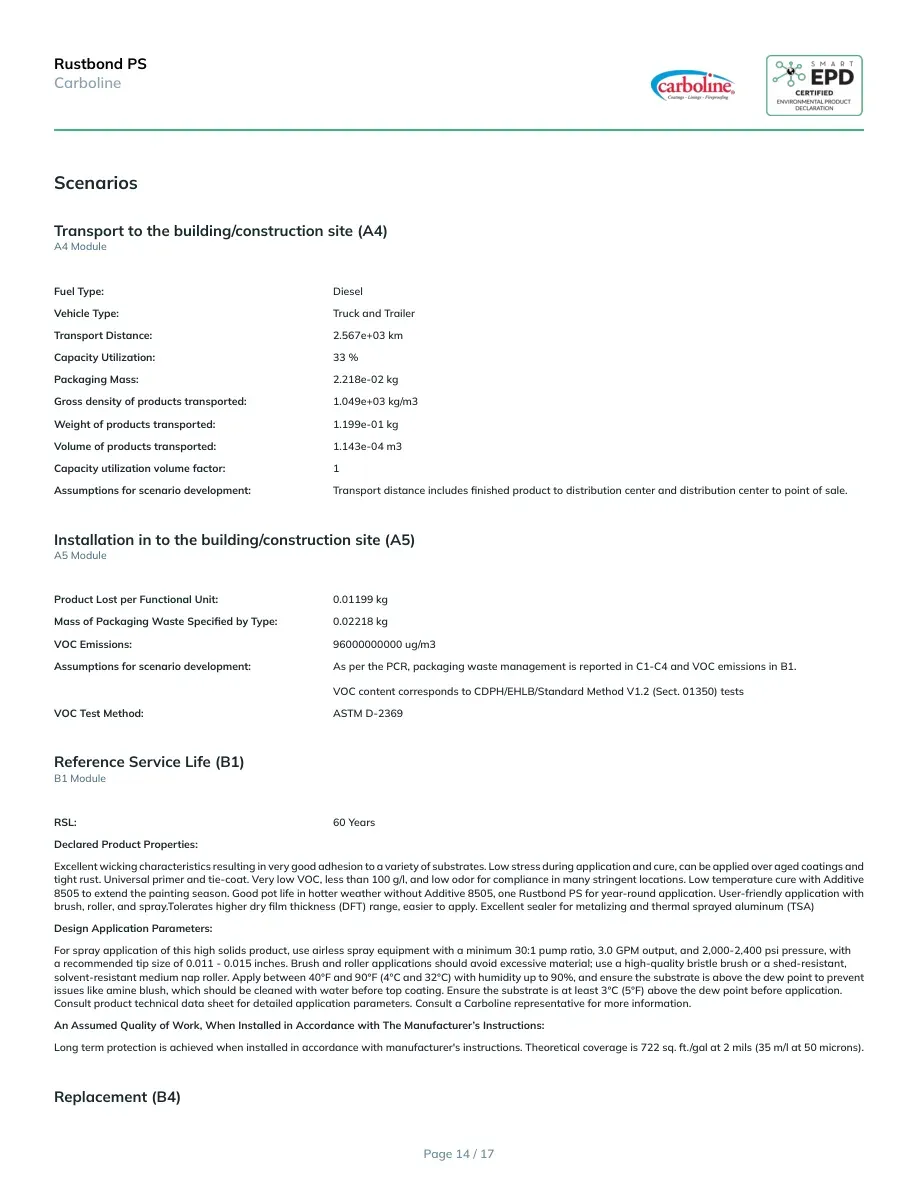
Rustbond PSCarbolineScenariosTransport to the building/construction site (A4)A4 ModuleFuel Type:DieselVehicle Type:Truck and TrailerTransport Distance:2.567e+03 kmCapacity Utilization:33 %Packaging Mass:2.218e-02 kgGross density of products transported:1.049e+03 kg/m3Weight of products transported:1.199e-01 kgVolume of products transported:1.143e-04 m3Capacity utilization volume factor:1Assumptions for scenario development:Transport distance includes finished product to distribution center and distribution center to point of sale.Installation in to the building/construction site (A5)A5 ModuleProduct Lost per Functional Unit:0.01199 kgMass of Packaging Waste Specified by Type:0.02218 kgVOC Emissions:96000000000 ug/m3Assumptions for scenario development:As per the PCR, packaging waste management is reported in C1-C4 and VOC emissions in B1.VOC content corresponds to CDPH/EHLB/Standard Method V1.2 (Sect. 01350) testsVOC Test Method:ASTM D-2369Reference Service Life (B1)B1 ModuleRSL:60 YearsDeclared Product Properties:Excellent wicking characteristics resulting in very good adhesion to a variety of substrates. Low stress during application and cure, can be applied over aged coatings and tight rust. Universal primer and tie-coat. Very low VOC, less than 100 g/l, and low odor for compliance in many stringent locations. Low temperature cure with Additive 8505 to extend the painting season. Good pot life in hotter weather without Additive 8505, one Rustbond PS for year-round application. User-friendly application with brush, roller, and spray.Tolerates higher dry film thickness (DFT) range, easier to apply. Excellent sealer for metalizing and thermal sprayed aluminum (TSA)Design Application Parameters:For spray application of this high solids product, use airless spray equipment with a minimum 30:1 pump ratio, 3.0 GPM output, and 2,000-2,400 psi pressure, with a recommended tip size of 0.011 - 0.015 inches. Brush and roller applications should avoid excessive material; use a high-quality bristle brush or a shed-resistant, solvent-resistant medium nap roller. Apply between 40°F and 90°F (4°C and 32°C) with humidity up to 90%, and ensure the substrate is above the dew point to prevent issues like amine blush, which should be cleaned with water before top coating. Ensure the substrate is at least 3°C (5°F) above the dew point before application. Consult product technical data sheet for detailed application parameters. Consult a Carboline representative for more information.An Assumed Quality of Work, When Installed in Accordance with The Manufacturer’s Instructions:Long term protection is achieved when installed in accordance with manufacturer's instructions. Theoretical coverage is 722 sq. ft./gal at 2 mils (35 m/l at 50 microns).Replacement (B4)Page 14 / 17
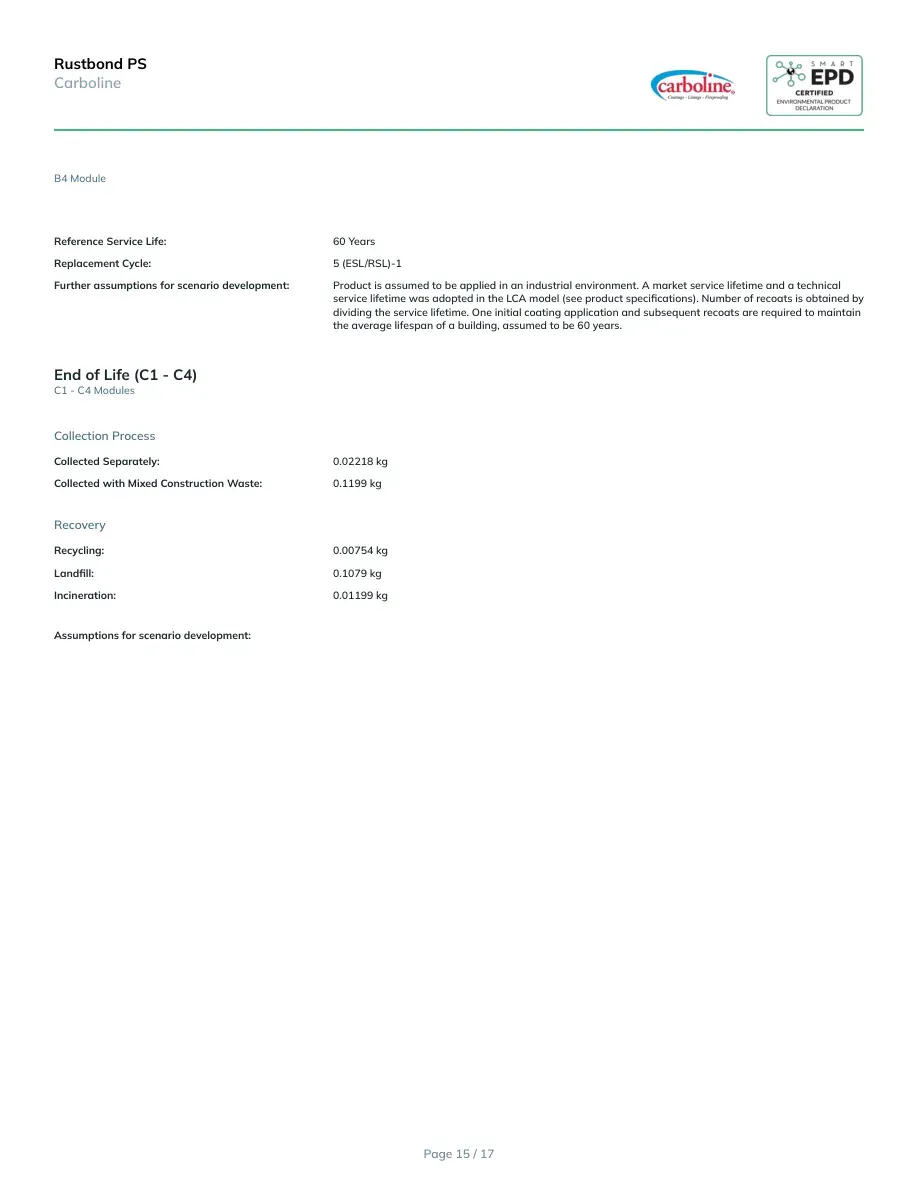
Rustbond PSCarbolineB4 ModuleReference Service Life:60 YearsReplacement Cycle:5 (ESL/RSL)-1Further assumptions for scenario development:Product is assumed to be applied in an industrial environment. A market service lifetime and a technical service lifetime was adopted in the LCA model (see product specifications). Number of recoats is obtained by dividing the service lifetime. One initial coating application and subsequent recoats are required to maintain the average lifespan of a building, assumed to be 60 years.End of Life (C1 - C4)C1 - C4 ModulesCollection ProcessCollected Separately:0.02218 kgCollected with Mixed Construction Waste:0.1199 kgRecoveryRecycling:0.00754 kgLandfill:0.1079 kgIncineration:0.01199 kgAssumptions for scenario development: Page 15 / 17
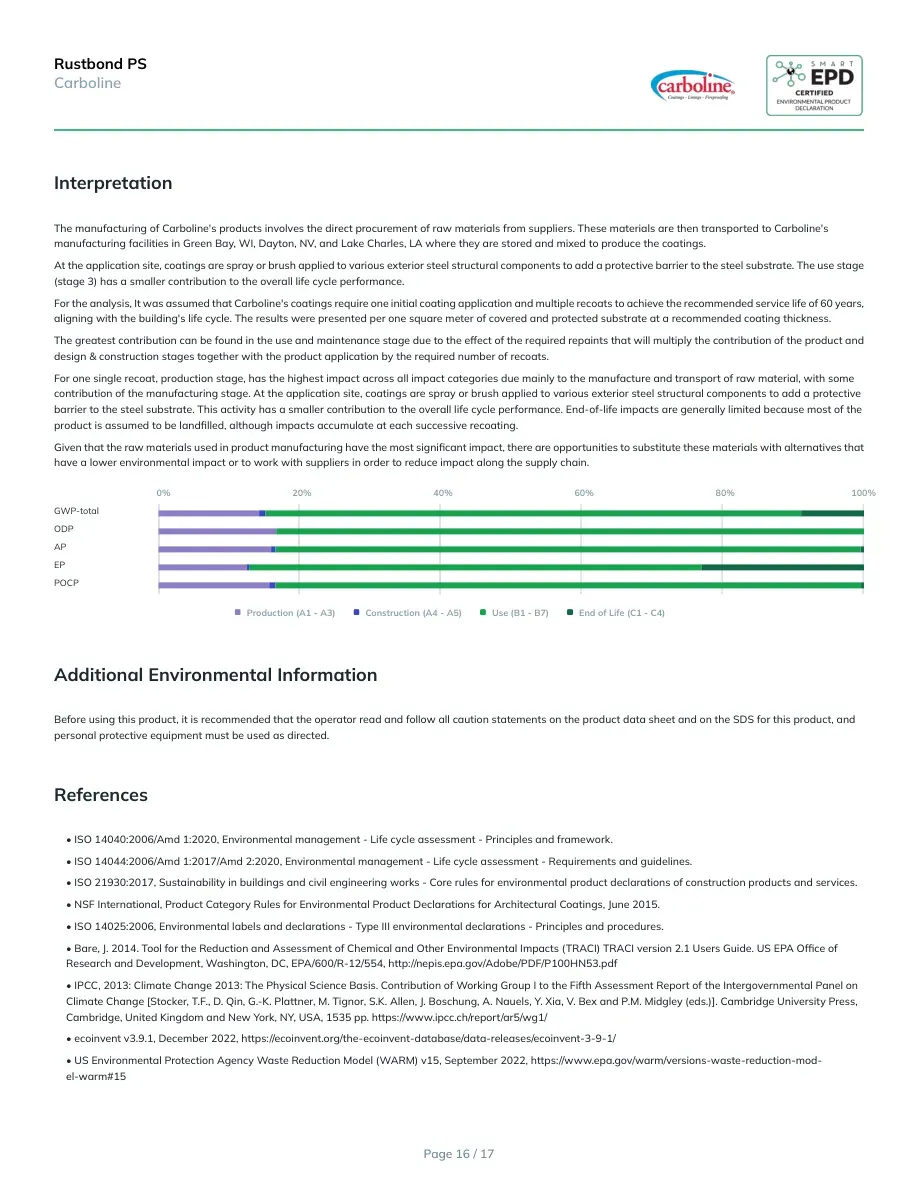
Rustbond PSCarbolineInterpretationThe manufacturing of Carboline's products involves the direct procurement of raw materials from suppliers. These materials are then transported to Carboline's manufacturing facilities in Green Bay, WI, Dayton, NV, and Lake Charles, LA where they are stored and mixed to produce the coatings.At the application site, coatings are spray or brush applied to various exterior steel structural components to add a protective barrier to the steel substrate. The use stage (stage 3) has a smaller contribution to the overall life cycle performance.For the analysis, It was assumed that Carboline's coatings require one initial coating application and multiple recoats to achieve the recommended service life of 60 years, aligning with the building's life cycle. The results were presented per one square meter of covered and protected substrate at a recommended coating thickness.The greatest contribution can be found in the use and maintenance stage due to the effect of the required repaints that will multiply the contribution of the product and design & construction stages together with the product application by the required number of recoats.For one single recoat, production stage, has the highest impact across all impact categories due mainly to the manufacture and transport of raw material, with some contribution of the manufacturing stage. At the application site, coatings are spray or brush applied to various exterior steel structural components to add a protective barrier to the steel substrate. This activity has a smaller contribution to the overall life cycle performance. End-of-life impacts are generally limited because most of the product is assumed to be landfilled, although impacts accumulate at each successive recoating.Given that the raw materials used in product manufacturing have the most significant impact, there are opportunities to substitute these materials with alternatives that have a lower environmental impact or to work with suppliers in order to reduce impact along the supply chain.0%20%40%60%80%100%GWP-totalODPAPEPPOCPProduction (A1 - A3)Construction (A4 - A5)Use (B1 - B7)End of Life (C1 - C4)Additional Environmental InformationBefore using this product, it is recommended that the operator read and follow all caution statements on the product data sheet and on the SDS for this product, and personal protective equipment must be used as directed.References• ISO 14040:2006/Amd 1:2020, Environmental management - Life cycle assessment - Principles and framework.• ISO 14044:2006/Amd 1:2017/Amd 2:2020, Environmental management - Life cycle assessment - Requirements and guidelines.• ISO 21930:2017, Sustainability in buildings and civil engineering works - Core rules for environmental product declarations of construction products and services.• NSF International, Product Category Rules for Environmental Product Declarations for Architectural Coatings, June 2015.• ISO 14025:2006, Environmental labels and declarations - Type III environmental declarations - Principles and procedures.• Bare, J. 2014. Tool for the Reduction and Assessment of Chemical and Other Environmental Impacts (TRACI) TRACI version 2.1 Users Guide. US EPA Office of Research and Development, Washington, DC, EPA/600/R-12/554, http://nepis.epa.gov/Adobe/PDF/P100HN53.pdf• IPCC, 2013: Climate Change 2013: The Physical Science Basis. Contribution of Working Group I to the Fifth Assessment Report of the Intergovernmental Panel on Climate Change [Stocker, T.F., D. Qin, G.-K. Plattner, M. Tignor, S.K. Allen, J. Boschung, A. Nauels, Y. Xia, V. Bex and P.M. Midgley (eds.)]. Cambridge University Press, Cambridge, United Kingdom and New York, NY, USA, 1535 pp. https://www.ipcc.ch/report/ar5/wg1/• ecoinvent v3.9.1, December 2022, https://ecoinvent.org/the-ecoinvent-database/data-releases/ecoinvent-3-9-1/• US Environmental Protection Agency Waste Reduction Model (WARM) v15, September 2022, https://www.epa.gov/warm/versions-waste-reduction-mod-el-warm#15Page 16 / 17
Rustbond PSCarboline• Ryberg, M., M. Vieira, M. Zgola, et al. Updated US and Canadian Normalization Factors for TRACI 2.1. CLEAN TECHNOLOGIES ENVIRONMENTAL POLICY. Springer, New York, NY, 16(2):329-339 (2014). http://dx.doi.org/10.1007/s10098-013-0629-z• Weidema B. P., C. Bauer, R. Hischier, et al. Overview and methodology. Data quality guideline for the ecoinvent database version 3. Ecoinvent Report 1(v3), St. Gallen: The ecoinvent Centre (2013). https://ecoinvent.org/wp-content/uploads/2021/09/dataqualityguideline_ecoinvent_3_20130506.pdf• Facts and figures about materials, waste and recycling (2018). https://www.epa.gov/facts-and-figures-about-materials-waste-and-recycling• Carboline Internal Report, Life Cycle Assessment of Carboquick 200 Coating, September 2023• Carboline Internal Report, Amendment to Life Cycle Assessment of Carboquick 200 Coating for Sixteen Additional Coatings, March 2024Page 17 / 17
